
Deer Proof Gardening

Updated: Aug 22
Can deer and gardens co-exist?
In Maryland, all plants fall somewhere on a deer-food spectrum, ranging from tasty to toxic.
The tasty end of the spectrum might include apples from your apple tree – or even the leaves and twigs of a young apple tree itself. Whereas the toxic end ranges from distasteful to actually poisonous – those plants deer will only eat if all other viable resources are depleted or they'll try once and never again.
From our experience in heavily-deered areas bordering on woodlands, we find the following categories on the deer-food spectrum to hold true:
From deer-proof to deer-prone and the bulk of plants in-between
Deer-proof plants
These are our ‘safe bets’. Reliably, at no stage of these plants’ lives will deer be interested in eating them. They can be planted unprotected and, while the deer might walk over or through them in some cases, they’ll otherwise leave these plantings alone.
There are consistently deer-proof plants in all planting categories, including:
Ground cover
Native pachysandra (Pachysandra procumbans), moss phlox (Phlox subulata), and creeping thyme (Thymus serpyllum) are a few of our safe bets. While creeping thyme isn’t native, it is a pollinator magnet, provides shelter for beneficial and overwintering insects, and offers forage and nesting material for local bird populations, making it a net-positive non-native species.
Perennials
Mountain mint (Pycnanthemum muticum), spicebush (Lindera benzoin), and wild bergamot (Monarda fistulosa) are strong-smelling and therefore distasteful to deer, while the asclepias family (such as butterfly weed and the milkweeds) contains toxic compounds.
Schrubs and trees…I’ll let you know when I find one.
Even the most reliably deer-repellant shrubs and trees have been grazed in our experience, typically when they’re young. Our recommendation is to cage new shrubs and trees exposed to deer populations until the plantings are mature enough to withstand browsing and “bark stripping” (when young bucks rub their antlers on a young tree’s tender bark, potentially exposing the tree to disease and infection).
The University of California Agricultural and Natural Resources (UCANR) includes thorny plants in their inventory of the most consistently deer-resistant plantings - those plants you need gloves to handle, like certain cactus and hollies.
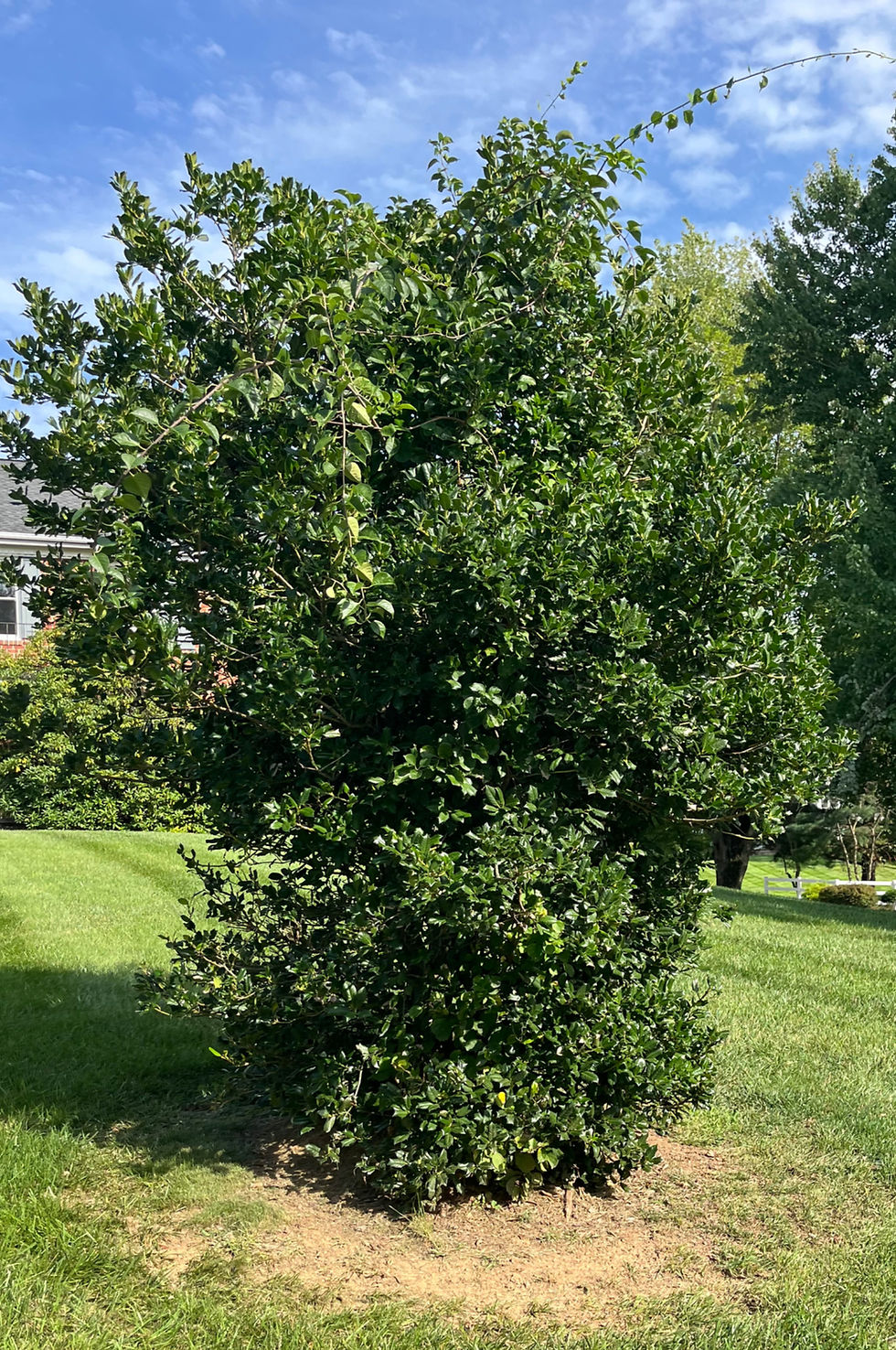
Our hollies, however, often have the recognizable ‘skinny bottom’ where deer have eaten into the shrub as far up as they could reach, so we rely less on the prickly rule-of-thumb.
Deer-resistant plants
The majority of Mid-Atlantic native plants fall in the category of deer-resistant plants - those plantings that can exist amongst deer but may be impacted in some way.
Deer may nibble a plant’s early Spring shoots but not touch it once it’s more mature. They may graze one clethra, pruning it to a sparse bush, and leave it’s sister-next-door completely untouched.

In such cases, co-existing might mean netting a plant until it’s past adolescence or caging until it’s grown tall or tough enough to survive deer interaction.
And then there are the:
Deer-prone plants
The heartbreakers. Those plants you’ve always wanted, spent a lot of money to get, nurtured and protected for years until they were taller than the deer themselves, only to remove the caging and have the shrubs stripped for parts overnight.


Few things will stop a deer from eating these plants into oblivion.
Deer-proofing your garden
UCANR recommends a “trial-and-error” approach by setting out some sacrificial plants to test the palette of your local deer populations.
I’ve planted sacrificial plants in both the open front yard and fenced back yard to very different outcomes.
Joe Pye weed (see 2024 Native Plant of the Year: Joe Pye Weed) lives as a tight mound of greenery in the front yard, where it’s always too deer-eaten to grow any taller, never mind blossom, and yet it reliably grows back year after year as a sacrificial food source for deer.
Protected in the back yard, Joe Pye grows to its full 7-foot+ height, weighted down with blooms and covered in pollinators from July through September.
Gardens and deer can co-exist
On the spectrum of deer-proof gardening, your garden can be as deer-friendly or unfriendly as you desire. Keep in mind, what works for others may not work for your yard.
Finding your sweet spot starts with a few decisions about how deer and your garden will co-exist:
What role will your garden play in its relationship with deer? It could be a buffet for a stags' night out or the gas station sandwich they’ll only eat if everything else is closed. Or maybe just a cool spot to bed down on a summer's night.
What planting selections fit that role? Find the right balance of deer-proof, deer-resistant, and deer-prone plants and decide if all the apples are for you or if you'll share the bounty.
What support will your plantings need? This could be temporary, like caging, or permanent, like a tall fence around your yard. For more information, visit Maryland’s Department of Natural Resources post of ‘deer exclusion’ and University of Maryland Extension’s “The 4 Pillars of Managing Deer Damage.”
Finding ways for gardens to co-exist with deer is a never-ending experiment of trial and error, a journey of successes and failures, with some frustrating and heart-warming moments in-between.
Share how your garden co-exists with deer at: gardenstories@thewildhydrangea.com.
Send pics if you’ve got ‘em!
