
2024 Native Plant of the Year - Cornus Florida

Updated: Aug 23
The humble dogwood. A childhood favorite climbing tree, with its low-branching form.

I inherited two dogwoods when I moved to my current home. One came with the house, the other inherited from a neighbor when a fence survey revealed he’d inadvertently planted the flowering dogwood over the property line, 36 years prior.
For a species that already, year after year, provides shade, food, and all-season interest, 2024 was a banner year for Cornus florida, earning it our Native Plant of the Year award.
What is Cornus Florida?
An oldie but goodie. An overlooked gem. The unsung hero of the garden.
Flowering dogwood has been a staple in suburban yards since the 1950’s, long beloved for their small stature and April blossoms.
Typically growing between 15’ and 30’ tall, this dogwood species is suitable for small gardens or really wherever you can see this stellar-performing tree from best.
Resistant to deer and attractive to native birds and squirrels, Cornus florida delivers prominent whitish-pink Spring blooms and deep red-to-burgundy Fall foliage.
What is Cornus Florida good for?
A small but effective shade tree, planting just two flowering dogwoods together gives the sense of a shady grove.
Whether planted in the garden as a specimen tree or mini-grove or growing wild in a native woodland understory ecosystem, flowering dogwood is a keystone species and important contributor to Maryland’s bio-diversity.
Spring Flowers
Early spring flowers provide essential nectar and pollen for bees and butterflies, like native Mining bees and the Spring Azure butterfly.

Summer Shade
Dense branches offer shelter and safe nesting sites for native birds, such as Robins, Cardinals, and Bluebirds.
Fall Fat
High-fat, high-calcium red berries feed dozens of local bird and small mammal species.
Winter Womb
Cornus florida serves as a larval host for many native butterfly and moth caterpillars, including the Dogwood borer, Dogwood thyatirid moth, Cecropia silkmoth, and Rosaceous leaf roller.

Thriving naturally along woodland edges and under taller canopy trees, flowering dogwood plays a key role in the soft landings that support a caterpillar’s lifecycle - from its green leaves as food for caterpillars to its dried, fallen leaf litter sheltering larvae (see Heather Holm’s writings on Soft Landings).
How did Cornus florida perform in 2024?
2024 was a particularly stellar year for our flowering dogwoods. In some years, due to temperature or moisture anomalies, Cornus florida may lose color, have poor berry production or less impressive blooms. In 2024, the conditions were right for the humble but sneaky-showy flowering dogwood tree to have a banner year.
Spring
April 2024 blossoms were particularly showy over a period of several weeks, due to a lack of late-Spring frosts.
 |  |
Summer
By June 2024, Cornus florida were fully leafed out, providing food and shelter to local birds. We frequently observed:
Wood-peckers picking insects from the bark
Dark-eyed Juncos rushing head-first down the tree's trunk
Cardinals and Bluebirds flashing their colors before disappearing into the canopy
Making for very entertaining bird watching.

Fall
The late-September burgundy leaves were a harbinger of the Autumn on its way.

The abundant red berries caused a feeding frenzy - we listened to squirrels from morning 'til night, gnawing on the outer flesh to reach the seeds inside.
Winter
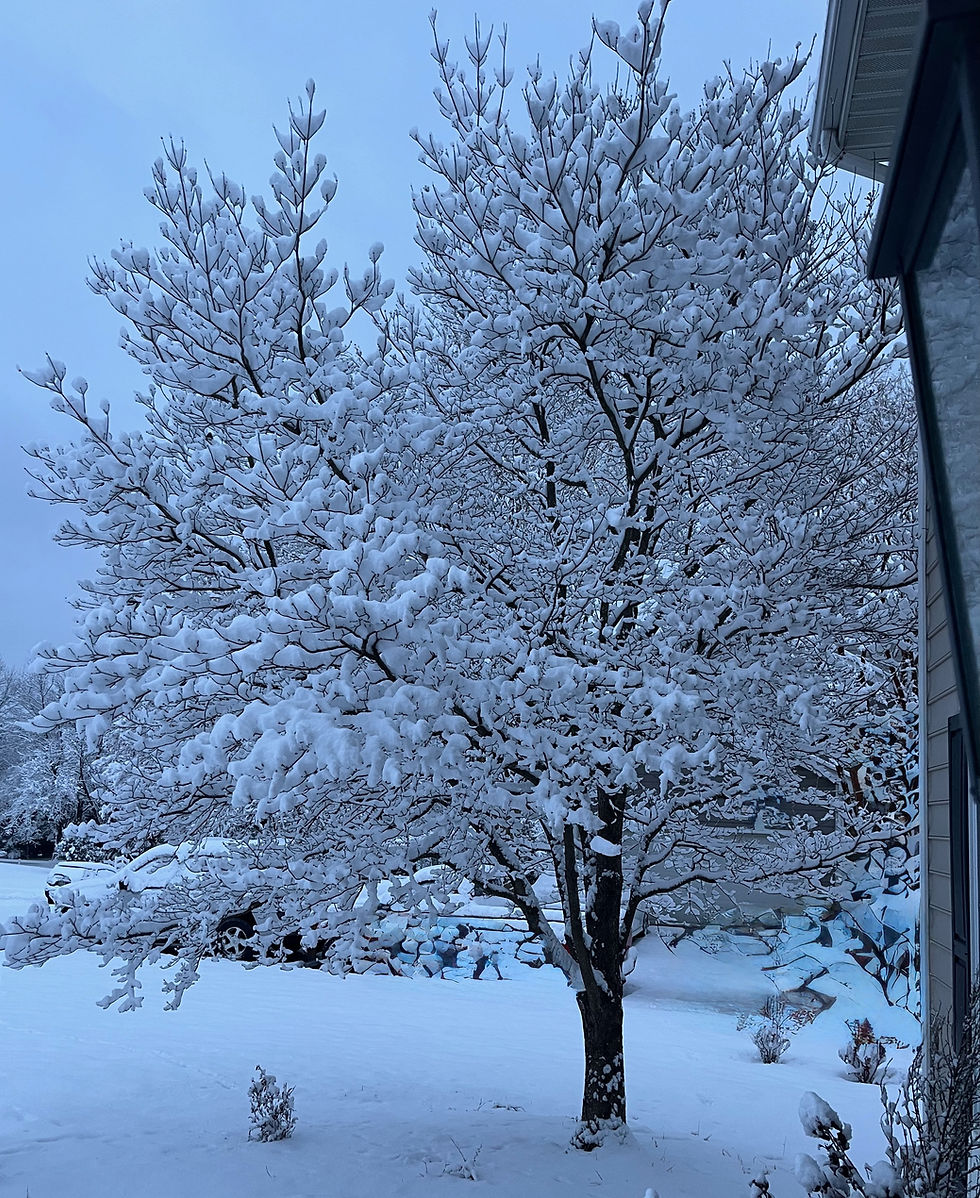
Picture-worthy with every snow or ice storm, Cornus florida’s symmetrical structure provides Winter interest in an often drab winter landscape.
 |  |
A note on Cornus florida health
In recent years, Cornus florida in Maryland have experienced issues with powdery mildew, which can be helped by planting new dogwoods in partial sun with well-drained soil, so leaves can dry quickly.
If selecting dogwoods for planting, consider resistant cultivars like 'Appalachian Spring', a native strain originally discovered in Maryland, and other native Cornus species like Cornus alba and Cornus sericea (red osier dogwood) which are both native and powdery mildew-resistant.

